What Happens to Your Teeth Overnight with Invisalign
Overnight, your Invisalign aligners apply gentle, continuous pressure that keeps your teeth slowly shifting toward their planned positions. Those sleeping hours are essential because they count toward the 20 to 22 hours of daily wear needed for steady, predictable results.
- Your teeth keep moving overnight because aligners deliver steady, light pressure while you sleep.
- Nighttime hours are a large part of the 20 to 22 hours of daily wear your plan requires.
- Sleeping with your aligners in is safe and expected, not something to avoid.
- Wearing aligners only at night usually slows or stalls tooth movement.
- Clean your aligners and teeth before bed to prevent stains and odour.
What Happens to Your Teeth Overnight with Invisalign
Overnight, your teeth continue to shift while your aligners rest snugly in place. The trays apply gentle, continuous pressure that guides each tooth toward its planned position, and this quiet progress happens while you sleep.
The short version: gentle, continuous pressure keeps teeth shifting while you sleep
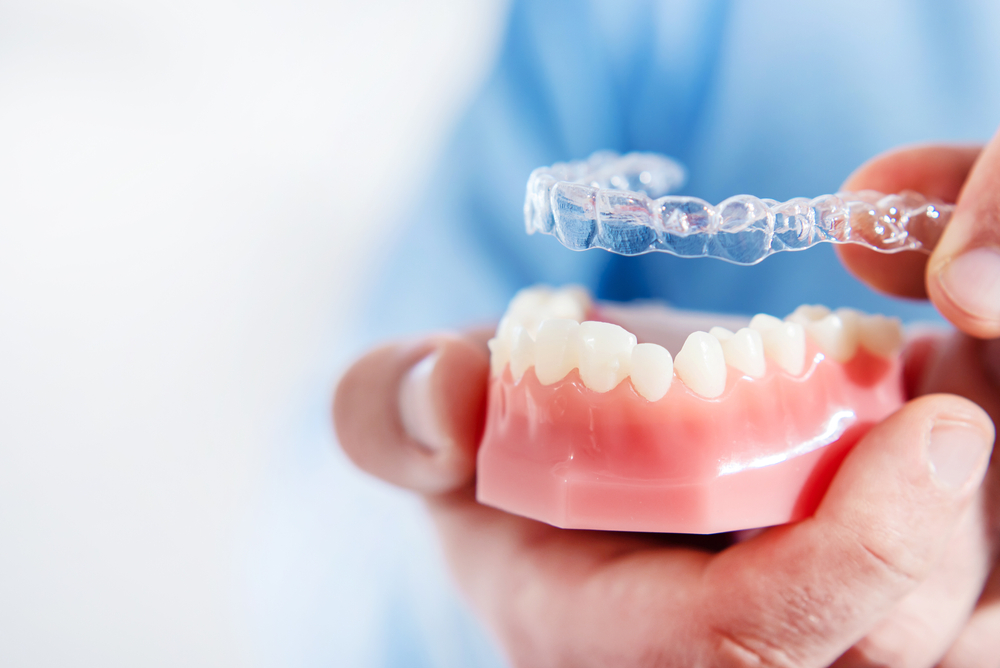
Every set of aligners is shaped slightly differently from the position of your current teeth. That small difference creates a light, steady force. As you sleep, that force keeps working, encouraging teeth to move a fraction closer to their target. You feel very little, yet real change is happening.
Why nighttime hours count toward your 20 to 22 hour daily goal
Sleep gives you a long, uninterrupted block of wear. Most people sleep seven to nine hours, which is a large share of the daily 20 to 22 hour target. Because you are not talking, snacking, or removing your trays during this time, those hours are some of the most productive of your day. At South Kitchener Dentistry, Dr. Jigar Nandola often reminds patients that a good night of consistent wear can make the difference between staying on schedule and falling behind.
How Invisalign Moves Your Teeth While You Sleep
Invisalign moves your teeth by applying light pressure that prompts the bone around each root to gradually reshape, allowing the tooth to settle into a new position. This process continues quietly overnight as long as the aligner stays seated.
The gentle process behind tooth movement
When steady, light force is placed on a tooth, the surrounding bone slowly adapts. Old bone gives way on one side and new bone forms on the other, letting the tooth drift into place over time. This is why patience and consistency matter more than force.
Why continuous wear matters more than intense force
More pressure does not equal faster results. Research shows that light, continuous force is more effective and comfortable than heavy pressure, which can be counterproductive. A clinical review on effective Invisalign treatment explains how controlled, gentle forces produce more predictable movement, and you can read that discussion in the study on current guidelines for effective Invisalign treatment, which reviews how aligners are designed to work with your body rather than against it.
What the research says about wear routines
Studies on wear routines consistently link longer daily wear with better outcomes. A randomized clinical trial comparing different wear schedules found that consistent, extended daily wear improved how accurately teeth moved, and the details appear in the report on the effect of clear aligner wear protocol on tooth movement. In short, the hours you sleep with your aligners in are working directly in your favour.
Why Overnight Wear Is a Critical Part of Treatment
Overnight wear is critical because it provides a long stretch of uninterrupted pressure that keeps your teeth moving on schedule. Skipping it can quietly set your progress back.
Uninterrupted pressure during sleep
During the day, life interrupts your wear in small ways. At night, there are no interruptions. Your aligners stay in for hours at a time, delivering the kind of steady contact that drives efficient movement.
How missed hours slow your progress
Teeth begin to settle back toward their previous position when aligners are out for too long. Missing a full night of wear can undo a portion of the day's progress and may leave your next tray feeling tight. Over several nights, those missed hours can push your finish date later than planned.
"The patients who finish smoothly are almost always the ones who treat overnight wear as non-negotiable. Consistent sleep-time wear is one of the simplest habits that keeps a case on track."
Staying on track with your tray-change schedule
Your tray-change schedule assumes you are wearing each aligner the full recommended time, including overnight. When you keep up with nightly wear, each tray fits as designed, and you move to the next set on time. This steady rhythm is a big reason many Invisalign plans finish in roughly six to eight months.
Is It Safe to Sleep With Invisalign In?
Yes, it is safe and expected to sleep with your Invisalign aligners in. They are made for near-continuous wear, and nighttime is one of the best times to keep them seated.
Aligners are designed for near-continuous wear
Invisalign trays are built to be worn throughout the day and night. Sleeping with them in place is simply part of normal use, and it helps you reach your daily wear goal without effort.
Comfort and adjustment during the first few nights
The first few nights with a new set may feel slightly unfamiliar. Most people adjust quickly and stop noticing the trays within a night or two. Keeping them in while you sleep actually helps you get past this adjustment period faster.
Managing mild tenderness after switching to a new tray
A little tenderness after starting a fresh aligner is normal and usually fades within a day or two. To stay comfortable, try switching to a new tray at bedtime so the early pressure passes while you sleep. If tenderness feels sharp or lingers, reach out to South Kitchener Dentistry.
Can You Wear Invisalign Only at Night?
No, wearing active Invisalign aligners only at night is not enough to move your teeth as planned. Nighttime-only wear usually slows movement or stalls it completely.
Why nighttime-only wear typically slows or stalls movement
Active aligners need 20 to 22 hours per day to keep teeth moving predictably. A systematic review on what makes Invisalign successful highlights consistent daily wear as one of the strongest factors in reaching planned results, and you can explore that evidence in the review of factors influencing the success of Invisalign aligners. Wearing them only overnight falls far short of that target.
The difference between active aligners and retainers
Active aligners move teeth, while retainers hold teeth in place after treatment. Some retainers are worn only at night, which can lead to confusion. During active treatment, though, your trays are doing the work of moving teeth and need far more hours than an evening alone.
Following your dentist's prescribed wear plan
Your wear plan is tailored to your case. Dr. Jigar Nandola sets each schedule based on how your teeth need to move, so following it closely is the surest way to finish on time. If your routine makes full wear difficult, talk to the team at South Kitchener Dentistry rather than reducing hours on your own.
What to Expect Morning After Morning
Each morning, you can expect your aligners to feel snug and your teeth to feel slightly settled, which are normal signs that treatment is progressing. Over time, you will notice subtle changes in how your teeth line up.
Normal sensations when you remove your aligners
When you remove your trays in the morning, a mild sense of pressure or looseness is normal, especially early in a new set. This usually eases within minutes as your teeth adjust to being uncovered.
Signs your treatment is progressing well
Trays that fit closely, mild pressure that fades quickly, and teeth that gradually look straighter are all good signs. Comparing your smile every few weeks often reveals steady progress you may not notice day to day. A broad review of aligner movement confirms that consistent wear produces reliable results, as summarized in the systematic review on the accuracy and efficiency of dental movements with Invisalign.
When to Contact Your Kitchener Family Dentist
Contact your Kitchener family dentist if a tray does not seat properly, if tenderness is severe, or if you fall behind on wear. The team at South Kitchener Dentistry can adjust your plan and keep your progress on track.
Frequently Asked Questions
Q: Can you sleep with Invisalign in?
Q: What happens if you only wear Invisalign at night?
Q: How many hours a day should I wear my Invisalign?
Q: Will my teeth move back overnight if I don't wear my aligners?
Q: Do Invisalign trays stain overnight?
Q: Is it normal for my teeth to feel sore in the morning with Invisalign?
Meet Dr. Jigar Nandola
Dr. Jigar Nandola, a Diamond Invisalign Provider, never planned on becoming a dentist who understands his patients from the inside out, but that is exactly what happened. His fascination with dentistry started as a child, tagging along to his uncle's dental laboratory and watching the craft up close. Since then, he has walked the same path as many of his own patients, having personally gone through root canals, crowns, and fillings. That firsthand experience shapes how he treats every person who sits in his chair, with genuine empathy and a personalized approach rather than a one-size-fits-all routine.
His career has taken him across three countries. Dr. Nandola began practicing in India in 2008, then moved to Canada in 2019 to work as an associate dentist in Williams Lake, BC. In 2022, he settled in Kitchener, Ontario, and by 2023 he had purchased his own practice, giving him the freedom to deliver care exactly to his own high standards, without compromise.
Dr. Nandola stays current with the latest dental technology and techniques, weaving new advancements into daily practice so patients benefit from modern, comfortable care. Outside the clinic, he is happiest spending time with family and friends, and he shares a passion for helping animals with his wife, Monica, herself a licensed dentist in India now working toward Canadian licensure. Together, they are building more than a practice. They are building lasting relationships with every patient who walks through the door.
Remember
Your teeth keep moving overnight, so consistent wear and a simple bedtime cleaning routine make all the difference.